

Happier guests.Calmer spas.Sharper teams.
ELO™ adapts light, sound, scent and visuals to how your space is used — no cameras, no renovation.
Starting at 490 € per zone / month
See adaptive scenesYour space notices — and responds.
Senses the moment
Notices how busy the space is, the time of day and the conditions — without cameras.
Adapts the atmosphere
Light, sound, scent and visuals change together to fit what the room is for right now.
Gets better over time
Learns what works in your space and refines each scene, with you in control.
One space. A changing atmosphere.
Light, sound, scent and visuals shift together — a calmer arrival, a spa people linger in, a room where teams focus.
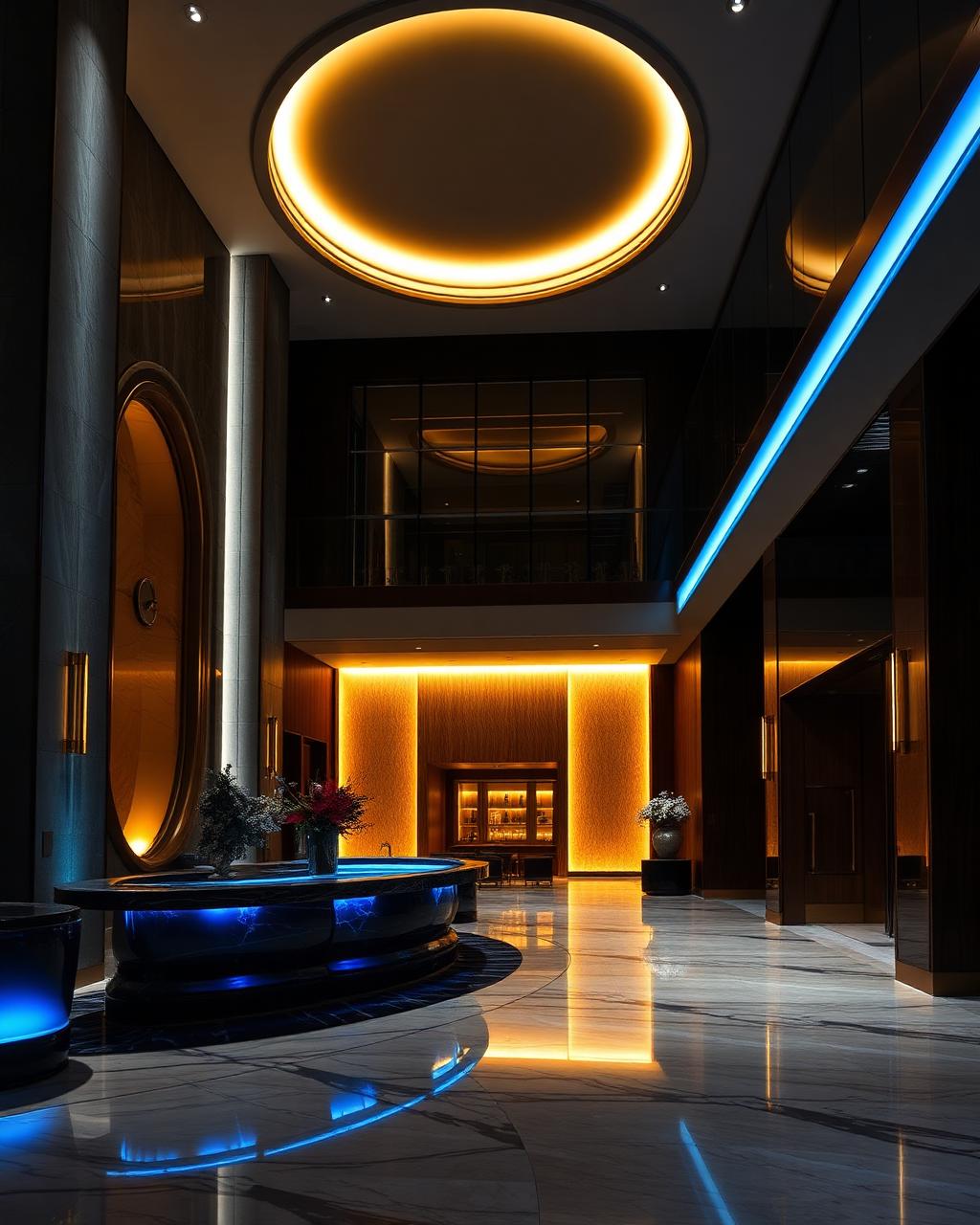
- Light
- Warm, welcoming glow
- Sound
- Quiet ambient tones
- Scent
- Light arrival scent
- Visuals
- Slow Nordic landscape
Better for people. Better for business.
A space that fits the moment shows up in how guests spend, how spa slots fill and how rooms get used. Each idea is tested in your space — not a guaranteed ELO result.
Profit
A better atmosphere should pay for itself — in higher spend, fuller slots and better-used rooms.
How we’d test this
- Compare two lounge sound settings on otherwise similar evenings — in a hotel bar, a spa café or an office lunch area — keeping prices and offers the same.
- Spend per guest (hotel bar, spa café) or desk and meeting-room utilisation (office); subtract extra operating and ELO costs to assess profit, not just sales.
- A restaurant study found that background-music tempo affected purchases and length of stay. It did not establish hotel profit gains.
Customer experience
Make every arrival feel considered.
How we’d test this
- Compare a gently scented arrival scene with an unscented one — hotel lobby, spa reception or office entrance — while light, sound and visuals stay steady.
- Optional 1–5 arrival-comfort ratings and atmosphere-related complaints per 100 stays, spa visits or arriving guests.
- A simulated-store experiment found different evaluations and behaviours with and without ambient scent. This is not evidence of better hotel ratings.
Wellness
Create room to unwind, without promising health benefits.
How we’d test this
- Compare a nature-inspired soundscape with your usual sound — in the spa lounge, a hotel suite or an office quiet room — at a similar volume.
- Optional 0–10 relaxation ratings before and after a visit, compared across the two settings.
- In a 40-person laboratory study, skin-conductance recovery tended to be faster with nature sounds than noise; a heart-rate measure showed no effect.
Happiness
Ask people what feels better, rather than assuming.
How we’d test this
- Let hotel guests, spa visitors or office teams rate two scenes in the same space while the other sensory layers stay unchanged.
- Optional 1–5 enjoyment ratings and the share who prefer each scene. These measure the experience, not lasting happiness.
- Participants in the same laboratory study rated nature sounds more pleasant than the tested noises. Pleasantness is not proof of long-term wellbeing.
Measures are agreed during the Sensory Survey and compared on similar days. Research from restaurants, retail and laboratories may not carry over to your property; these are not ELO case-study results.
Survey. Proposal. Your decision.
Start with one zone — an area managed together, such as a lobby, spa lounge or workspace — from 490 € / month. Your total depends on zones and features, confirmed in your proposal after the Sensory Survey.
Sensory Survey
We visit your space and assess light, sound, scent, visuals and air quality on site to understand current conditions. No hardware commitment.
Goals & proposal
We build a model of your space and establish a starting point for the results you care about, then send a proposal tailored to your space.
Connect & configure
We connect ELO to compatible building systems and configure your first zone. Equipment needs and installation timing are agreed in your proposal.
Adapt & report
ELO adapts the atmosphere continuously. Monthly reports compare results with your starting point, and a rollback switch lets you return to previous settings.
Stay in control: Return to previous settings when needed. Whatever you decide, you keep the findings from your Sensory Survey.
Your questions, answered.
Which building systems does ELO integrate with?
ELO connects to DALI-2 and DMX lighting, BACnet and KNX building management systems, and existing audio systems. If a feature such as scent is missing, we add discreet equipment rather than rebuild the room.
Do we have to replace our lighting or audio?
No. ELO works with existing DALI/DMX lighting, audio and building management systems. We add discreet equipment where needed, such as for scent, rather than replace the whole system.
Will guests or staff notice the system working?
Changes are designed to be gradual and unobtrusive, typically taking place over minutes. The aim is for people to feel comfortable, rather than notice the system adjusting the room.
How do we measure the difference?
We agree your goals and baseline before installation. After launch, compare relevant measures such as comfort feedback, time spent in the space or energy use. The measures and review period are agreed in your proposal.
What data do you collect, and is it GDPR compliant?
The ELO system collects environmental readings and anonymous occupancy data, not camera images or personal identities. Data is processed on-site in the EU, stays in the EU, and belongs to you. Our security controls are ISO 27001-ready; this does not mean we hold ISO 27001 certification.
What does a project cost?
Starting at 490 € per zone / month. A zone is an area managed together, such as a hotel lobby, spa lounge or workspace. Your monthly total depends on the number of zones and features. After the Sensory Survey, your tailored proposal confirms pricing, hardware, installation and service inclusions.
Which markets do you operate in?
We serve Finland, Sweden, Norway, Denmark and the Baltics from Helsinki. Elsewhere in Europe, we work with a local installation partner.
We visit. We listen. We propose.
Prefer to talk first? Pick a time in the calendar, or send the form and we will get back to you.
We visit
An on-site Sensory Survey of light, sound, scent and visuals.
We listen
We agree your goals for guests, teams and the business.
We propose
A tailored proposal. You decide whether to proceed.
Helsinki, Finland